 We’ve guided countless clients through one key decision as selective demolition contractors: should you remove everything or preserve parts of your existing structure? The answer affects your budget, timeline and project outcome. Selective demolition means demolishing certain sections of a building while preserving others, whereas full demolition involves completely removing a structure, including the foundation in many cases. Each type of demolition serves different project needs, from interior demolition for renovations to structural demolition for complete rebuilds. Understanding what is selective demolition versus full demolition helps you make informed choices. We’ll break down the core differences, cost implications, safety requirements and decision factors to help you choose the right approach for your commercial or residential project in this piece.
What is Selective Demolition vs Full Demolition
Defining Selective Demolition
Selective demolition involves removing specific structural or interior elements while preserving the rest of the building. We demolish only targeted areas identified for removal, not the entire structure. This surgical approach requires hand tools or specialized machinery to dismantle particular components without affecting surrounding areas.
Common selective demolition examples include removing non-load-bearing walls to create open floor plans, stripping outdated finishes while keeping structural elements intact, and demolishing rear additions while preserving main structures. We also handle interior strip-outs where all internal partitions and finishes come down but the structural shell remains standing.
This type of demolition demands careful planning and precision. Our crews need to understand how different building components interact to remove targeted areas without compromising structural integrity. The process is more surgical than traditional methods and requires strategic engineering and expert execution to preserve what stays while removing what goes.
Defining Full Demolition
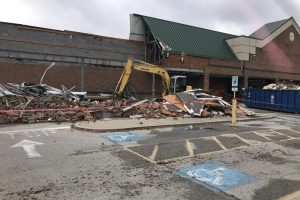
Full demolition involves removing a structure down to the ground. Most cases include foundations, slabs, and below-grade elements unless specified otherwise. We clear the site and create a blank slate for new construction.
The approach is straightforward in scope but still requires careful planning. Full demolition addresses debris removal, environmental considerations, and site preparation for what comes next. We remove all traces of the building or construction above ground and often below ground as well, depending on project specifications.
Full demolition uses heavy machinery like excavators and bulldozers to bring down entire buildings. The process is more direct than selective work, with focus moving toward efficient teardown, material handling, and safe site clearing. Coordination with utilities, permitting, and environmental regulations remains necessary though.
Core Differences at a Glance
The biggest problem between these methods is precision level. Selective demolition requires detailed planning, sequencing, and coordination with structural elements that remain in place. We spend more time upfront reviewing drawings, verifying field conditions, and planning removal methods to protect retained portions.
Full demolition is broader in scope and more predictable by contrast. The work proceeds faster since we don’t need to protect surrounding elements or provide temporary structural support. Selective demolition often costs more per square foot because of the care required, though total project costs run lower since nowhere near as much work gets done.
There’s another difference involving material handling. Selective demolition makes material salvage possible for reuse or recycling, with up to 85 percent of materials potentially recoverable. Full demolition generates more waste but offers faster and more predictable timelines without retention constraints.
Key Differences Between Selective and Full Demolition
Cost Comparison and Budget Impact
Price comparisons between these methods reveal counterintuitive patterns. Selective demolition costs more per square foot because of labor intensity and precision requirements. But total project costs run lower since you’re removing less material and rebuilding less afterward. Full residential demolition ranges from $8,000 to $20,000, or $4 to $10 per square foot. For a standard 1,500 square foot home, expect $14,000 to $19,000.
Selective work can deliver cost advantages through material reuse and retention of structural elements that cut construction expenses. Partial demolition projects fall in the middle range at $2,000 to $20,000 depending on scope, lowering overall costs by a lot through reduced labor, disposal fees, and rebuilding requirements. Full demolition involves standardized machine operations with lower labor intensity. But debris disposal and waste management costs climb higher.
Project Timeline and Scheduling
Selective demolition takes longer to complete because it involves targeted removal and protection of existing elements. The work is labor-intensive and needs careful hand work to preserve walls, floors, and systems you’re keeping. You can’t just rip and run. Crews must measure, mark, cut, and verify before every move.
Full demolition moves faster due to heavy equipment use and fewer constraints about preserving structural portions. Teardown proceeds quickly once permits and preparations are in place. But overall project timelines may extend due to full reconstruction needs.
Structural and Engineering Requirements
Buildings with sound framing, foundations, or load-bearing elements justify selective demolition, while widespread deterioration, water damage, or code violations make full demolition the safer option. Engineering evaluations assess load capacity, material condition, and structural performance under new demands.
Material Handling and Waste Management
Selective work allows for material separation and potential reuse, with certain components salvaged or recycled. Full demolition generates larger debris volumes that need efficient management. Projects that want to reduce landfill waste benefit from selective methods, while projects prioritizing speed favor full demolition paired with efficient debris removal planning.
When to Choose Each Type of Demolition
Best Scenarios for Selective Demolition
Renovation projects drive most selective demolition work. This type of demolition removes outdated sections without affecting useful parts at the time you’re keeping core elements like exterior walls, structural beams, or foundations. We handle building renovations where office spaces, homes, or commercial buildings just need makeovers but don’t require full teardowns.
Historic preservation demands selective approaches. Buildings with architectural or historical significance just need targeted removal while keeping valuable heritage features intact. We preserve original facades, ornamental features, or structurally sound interiors to maintain cultural value.
Material salvage opportunities reduce costs. Selective work generates lower disposal costs because less waste gets created. On top of that, you can salvage timber, metal, or fixtures for reuse or recycling. This defrays costs through on-site reuse or resale.
Active buildings require minimal disruption. Commercial buildings or multi-unit residential complexes benefit from selective demolition that reduces dust, noise, and operational disruption. Precision removal techniques let adjacent areas remain functional during work.
When Full Demolition Makes More Sense
Complete site clearance for new construction requires full demolition. Projects that just need clean slates with no remnants of old structures benefit from this approach. It will give sites free of obstacles that could interfere with new foundations, utilities, or architectural designs.
Buildings with structural instability demand full removal. Structures suffering extensive damage from natural disasters, severe neglect, or code violations pose safety risks that selective methods cannot reduce. Full demolition removes all hazards and prepares sites for redevelopment.
Redevelopment projects without salvage value favor full demolition. Full demolition reduces complexity by eliminating planning around what to keep versus remove at the time existing buildings have little reuse potential.
Factors That Guide Your Decision
Start with structural condition. Sound framing and foundations justify selective work. Widespread deterioration makes full demolition safer. Future site use also matters. Selective methods shorten timelines if new designs can integrate existing elements. Regulatory requirements vary by location, with some municipalities encouraging selective work to reduce waste.
Safety Requirements and Hiring a Demolition Contractor
Essential Safety Protocols for Both Methods
OSHA 29 CFR Part 1926, Subpart T regulations cover both selective and full demolition. The pre-demolition engineering survey is the most cited violation and represents over half of all preparatory operations citations. A competent person must assess structural condition, identify collapse risks and confirm safe demolition methods before work begins.
Utility disconnection follows. All electric, gas, water, steam and sewer lines must be shut off, capped or controlled at or outside the building line. Hazardous materials require mandatory inspection. EPA’s NESHAP regulations require asbestos inspection before any demolition. Specific thresholds trigger notification to state environmental agencies at least 10 working days prior.
Permits and Regulatory Compliance
Demolition permits require multiple approvals depending on jurisdiction. Austin contractors must notify adjacent properties five to 10 business days before work begins. Philadelphia requires dust control permits for buildings over three stories, exceeding 40 feet tall or larger than 10,000 square feet. Commercial projects often need zoning, fire department and public works approvals.
Choosing a Licensed and Insured Contractor
Verify contractor licenses through your jurisdiction’s database. Philadelphia licensed demolition contractors must hold Class A or B licenses, maintain current city tax compliance and file active insurance with L&I. Chicago requires Class A or B licenses for complex demolition and Class A through D for ordinary demolition. Insurance minimums range from $1 million to $5 million per occurrence depending on license class. Request proof of OSHA 30 safety training completion within five years for site safety managers.
The decision between selective and full demolition depends on your project goals, existing structural integrity, and budget constraints. Selective work preserves valuable elements and reduces waste. Full demolition delivers speed with complete site clearance. Get a structural assessment and consult with licensed demolition contractors who can review your specific situation before you decide. The right choice today sets the foundation for successful construction tomorrow.
FAQs
Q1. What is the main difference between selective demolition and full demolition? Selective demolition involves removing specific parts of a building while preserving other structural elements, such as exterior walls or foundations. Full demolition, on the other hand, means completely tearing down the entire structure down to the ground, including foundations in most cases. The key distinction is precision versus complete removal.
Q2. How much does it typically cost to demolish a house? Full residential demolition costs range from $8,000 to $20,000, or approximately $4 to $10 per square foot. For a standard 1,500 square foot home, you can expect to pay between $14,000 and $19,000 nationally. Selective or partial demolition projects typically cost $2,000 to $20,000 depending on the scope of work.
Q3. What is a demolition contractor called? A demolition contractor is often referred to as a demolitionist or demolition expert. These professionals are responsible for safely and efficiently dismantling buildings and structures. They must be licensed, insured, and trained in safety protocols to handle both selective and full demolition projects.
Q4. When should I choose selective demolition over full demolition? Selective demolition is best for renovation projects where you want to preserve structurally sound elements, historic buildings requiring heritage feature protection, or situations where you want to salvage materials for reuse. It’s also ideal when you need to minimize disruption in active buildings or multi-unit complexes.
Q5. What safety requirements must demolition contractors follow? Demolition contractors must comply with OSHA regulations, including conducting pre-demolition engineering surveys and disconnecting all utilities before work begins. They must also perform asbestos inspections as required by EPA’s NESHAP regulations, obtain proper permits, and maintain appropriate insurance coverage ranging from $1 million to $5 million depending on the project scope.
We Provide Commercial Demolition Services And More
ABS Services is an experienced commercial demolition contractor serving Greater Cincinnati, Northern Kentucky, and Southeast Indiana. As a trusted demolition company Cincinnati businesses and developers can rely on, ABS Services provides comprehensive demolition solutions for commercial construction, renovation, redevelopment, and tenant improvement projects. From complete structure demolition and site demolition to interior demolition, floor grinding, and the removal of paving, utilities, walls, and other existing structures, our team has the equipment, experience, and expertise to safely and efficiently prepare properties for their next phase of development.
> Learn More
Contact us (513-617-1401) for more information or a quote
—

About ABS Services
ABS Services provides comprehensive commercial construction services to Greater Cincinnati, Northern Kentucky, and Southeast Indiana. We have the experience, equipment, and the right team to get the job done!
> Learn More